
“Imagine whatever there is at hand, does not exist in the world. Suppose that whatever is not at hand, exists in the world.” Khayam
I am writing while in quarantine. I feel like I lived once and died when this coronavirus pandemic crisis happened. Now, I am in a limbo, and my memory is likely to fade into oblivion. My eyes cannot see things, but their images, which are other things. Now all those cities, places, and buildings seem otherworldly. I am waiting for a new world to come. The problem, however, is that waiting would not be enough.
It takes more than that.
I was a traveler and an architect in my past life. Also, I’ve been engaged in fiction, Persian poems, and speculative fiction movies. I took the opportunity to have fun by immersing in their stories and experiencing the characteristics of various worlds and scenarios plotted in them. As odd as it seems, it was my way of practicing meditation. To be there and be free of mundane life for a moment. Consequently, these stories had an incredible impact on my dreams, lifestyle, and even architectural designs.
As an architect with the aspiration for building wonders in the desert and sky (as Walter Gropius calls for future architects), I have been hearing harsh opinions about my design ideas and concepts from time to time, such as them being called fictional, surreal, not practical, or even ridiculous. Basically, I had to embrace those opinions because I needed the job and the visa it provided to me to work in that country. (You know what I mean when you have the worst passport for traveling and working in the world!). Despite the opposition, I have had thousands of answers whirling in my head, such as “ you don’t have the stomach for different realities,” or “this is a place for the mind, not body.”
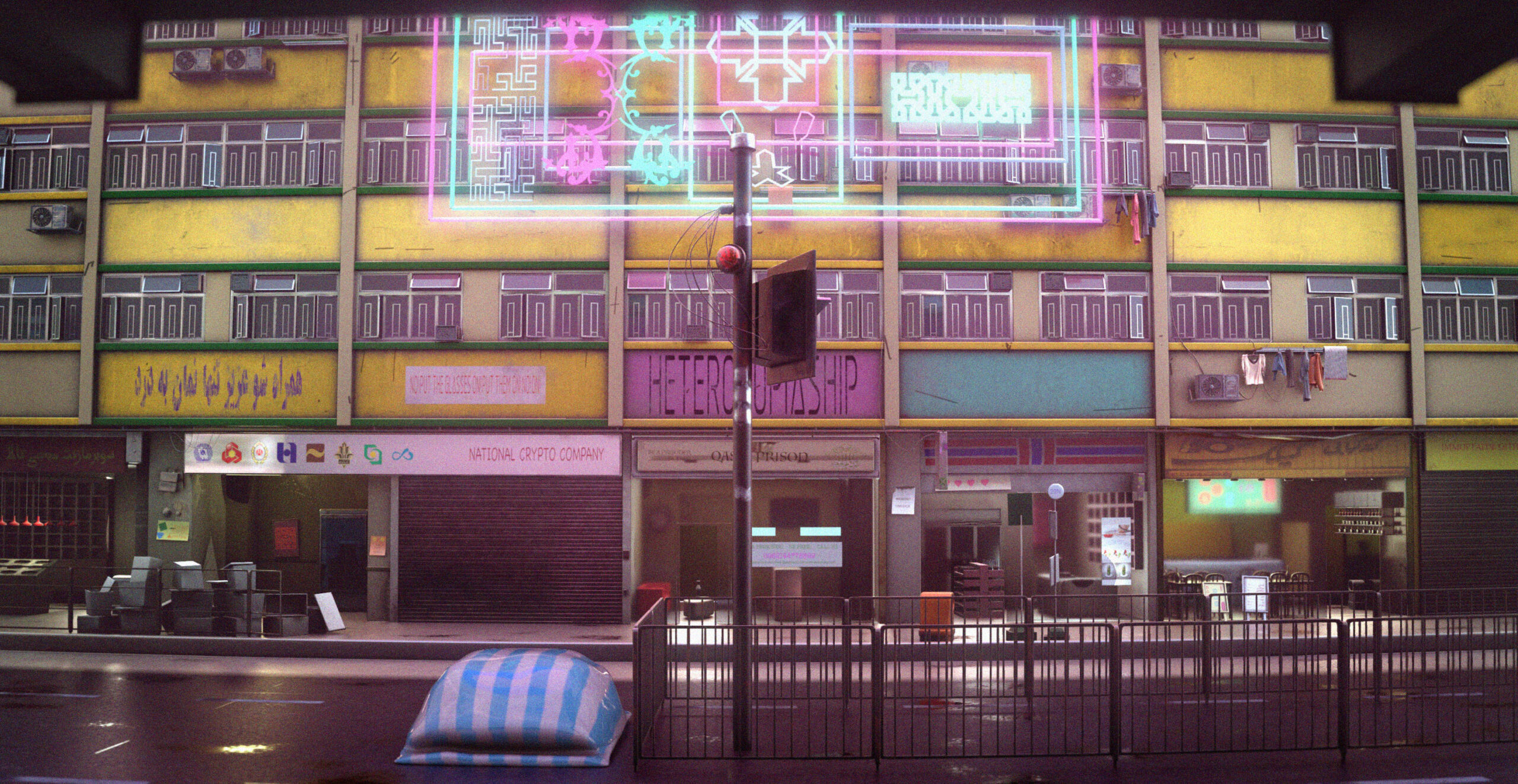
In the limbo, I am sitting on my couch in my tiny apartment, envisioning gigantic imaginary worlds. I could easily prove those critics wrong now as we are all facing the new crisis of coronavirus. Now we are living in a different world, and the urge to create and give legitimacy to the new worlds seems inevitable. As Philip K. Dick, the author of Sci-Fi novels, once said, we should speak of plural realities. Waiting is not enough; the act of inventing new ways of living and making them the new normal is essential for our situation today.
In this way, speculative stories in designs, fictions, movies, and futurology have the power to come in handy at these austere times. Stories provide us with the advantage of immersing in different realities and help us improve our ability to illustrate new worlds and orders. Although their first purpose is to entertain us, they could also serve as a factory of knowledge in the form of narratives. We could somehow experience all these new situations, such as human isolation, deserted cities, surveillance, fear of the unknown, climate crisis, and so on, in novels, movies, games, or virtual reality worlds. The post-crisis worlds are where we face uncomfortable realities. Experiencing these realities in advance enables us to notice the change from the present and how humanity could adapt to them. You cannot resist these changes when you have a strict mentality of one reality, which in many cases is genuinely not our choice but the reality manipulated by the system, media and governments in the hyper-commercialized world of the 21st century. I am a bit pessimist in this, but I’d love to be proven wrong.
Moreover, there are many issues today that scholars think could lead to drastic problems for humanity in the future. Mining probable scenarios in stories could help us take action toward those issues. Since narratives have the capacity to engage people deeply and more easily, these issues could become popular and spark discussions and debates amongst large numbers of societies. If we don’t take into account such probable scenarios for the coming future, it may be too late in the time of crisis for them to be established. Consider the severity of climate change in Middle Eastern countries like Iran. There are many well-written novels in this area, such as JG Ballard’s The Burning World, which provides us with different views of the kind of world in which we may live pretty soon. One thing is clear, regarding climate change issues if we move forward blindly, we might encounter a disaster soon. (If it has not already gotten late!)
I would argue that fictional worlds could also give us the chance to empower marginalized voices in the world, in order to make us pay attention to the shape of alternative narratives. As a Middle Eastern woman, it is so sad that even in our digital era some of us don’t have the opportunity to express ourselves and tell our stories about our own culture, society or policies to rise and move towards a diverse world. For instance, in the Black Panther movie, you could vividly realize the presence of African culture and ritual in Wakanda fictional country, and how it could shape a different society, yet depicting perfect futuristic scenes. We can all agree on something; each culture has precious values and lessons, and this could be the right time to look back and consider all those forgotten worlds.
I am in limbo; my journey took place in my past life. That is over. Now there is this huge emptiness in front of me. I am lying on my couch, wandering in the amorphous possible futures of mine, and in eac,h I could find another past. Such Intricate loops. And in one whimsical loop, I see myself once lived in a world where no desire was lost. How did I end up in this loop? Perhaps my future journey has just begun.